Your number vs. the line
Why Set Your Own Number Before You See the Line? Anchoring Bias in Sports Betting
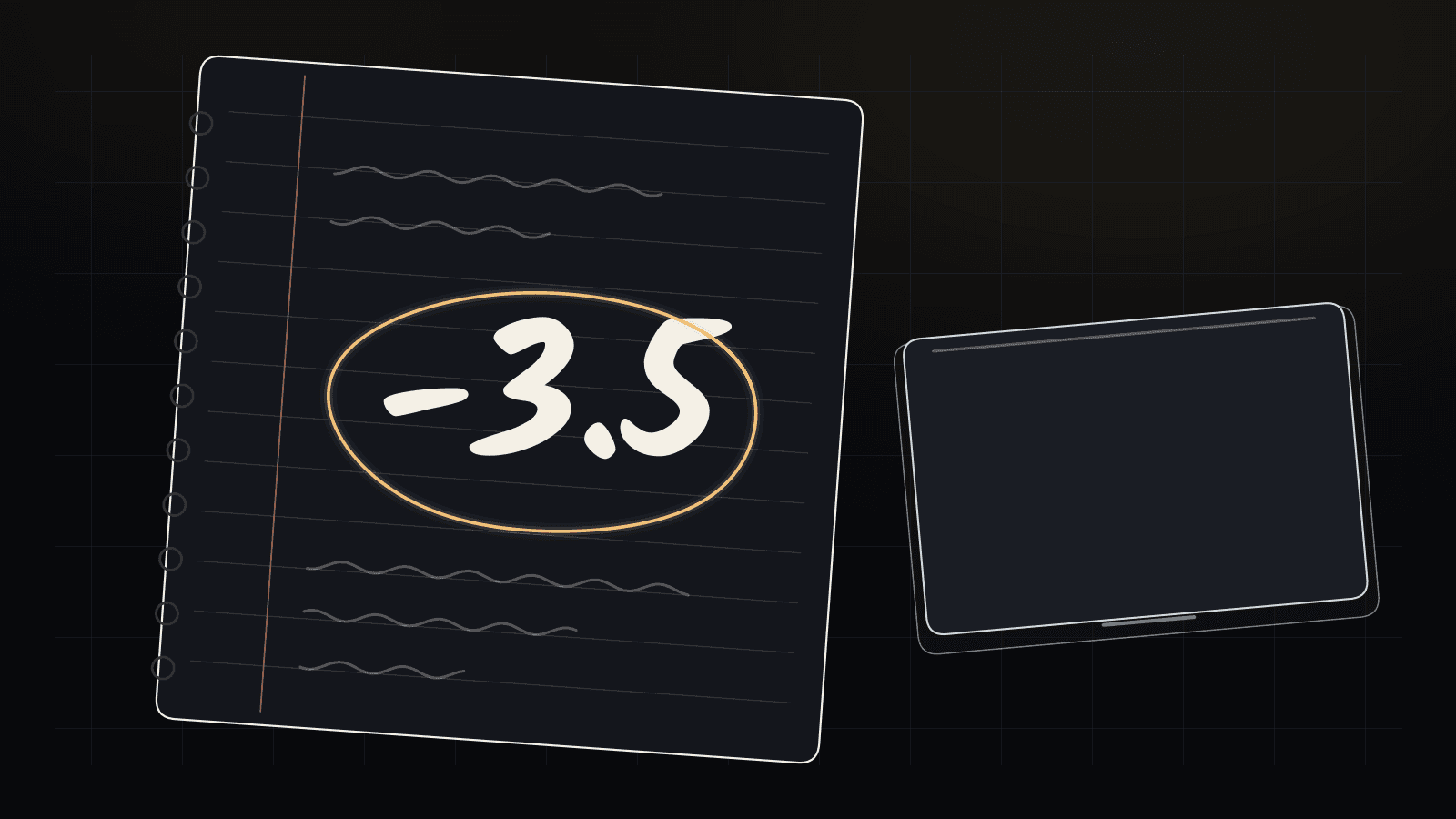
Set your own number before you see the line, because the line anchors you. Once it is on the screen, your estimate drifts toward it. A number you wrote down earlier, while calm, gives you an honest comparison. One you make afterward is mostly the line repeated back.
Why isn't a limit you can click past enough?
This week's betting news shows the problem. A ProPublica reporter spent 10 weeks betting on a major sportsbook's app, copying the patterns of a problem gambler to test its safeguards. He found the responsible-gambling tools mostly depend on users choosing to opt in. When his deposits reached $2,500, a pop-up required under New York law gave him two choices: set limits, or "I understand." He clicked "I understand" and kept betting. (ProPublica, Oct. 6)
Regulators are looking at the other side of the app, too. Legal Sports Betting reported on Oct. 8 that gaming regulators in New York, Massachusetts, and Maine are looking at how operators use AI to target bettors. It also reported that the New York Gaming Commission had a meeting set for Oct. 9 with proposals on AI in wagering and on safeguards for at-risk mobile bettors on the agenda.
The lesson for your own betting is simple. A limit you can dismiss in the moment is not the same as a decision you made earlier, while calm. In the moment, the game is on, the app is open, and a loss might be fresh. Earlier, none of that was true. The earlier decision is the one worth following.
What is anchoring bias in sports betting?
Anchoring is the pull a number has on your thinking once you have seen it. Psychologists Amos Tversky and Daniel Kahneman described it in a 1974 paper in Science: when people start from a given number and adjust from there, they tend not to adjust far enough.
In betting, the line is the anchor. Say you see a team at -7. You might think, "That feels a little high, maybe -6." If you had priced the game before seeing anything, you might have landed at -3. Seeing the line first did not make you wrong. It made you start from the sportsbook's number instead of your own, so most of the "value" you find is the line moved a point either way.
What is pre-commitment betting?
Pre-commitment means making your decisions before the moment of temptation, and writing them down so you can hold yourself to them. The decisions that matter most:
- Your number for each game you might bet.
- Your unit size, meaning how much one standard bet is.
- Your bankroll limits, such as a max bet size and a weekly loss limit. Here is how to set a betting loss limit.
- What makes you pass on a game.
No tool can make you follow them. But writing them down turns a mid-game impulse into a clear choice: follow the plan or break it. Your log shows which one you picked.
How do you set your own number before you see the line?
- Price the game before you open any odds screen. Write down the spread you think is fair.
- Then look at the line. Write it next to your number, with the time you saw it.
- Tag the game BET, WATCH, or PASS. BET means the gap between your number and the line meets a rule you set ahead of time. WATCH means you want to track it without money on it. PASS means you have no number, or no gap worth acting on.
- If it is a BET, use the unit size you already chose. Don't raise it because you feel strongly.
- Don't rewrite your number after you see the line. If real news changes the game, write a new number and note why.
How do you know if your numbers are any good?
Grade against the closing line, not the final score. Closing line value (CLV) compares the number you took with the last line before the game starts. If your numbers keep landing on the right side of the close, you are pricing games well. If your number usually matches the line you saw, you probably saw the line first.
CLV does not mean the bet won, and it does not promise a profit. One game tells you very little. A season of logged numbers tells you a lot more.
BetSharper is a journal built for this: set your number before you see the line, tag each game BET, WATCH, or PASS, and grade it against the close. It is a self-awareness tool, not treatment. Start your journal at betsharper.ai.
Common questions
Why should I set my own number before I see the line? Because the line anchors your estimate. A number you wrote down first gives you an honest comparison. One made after seeing the line tends to drift toward it.
What is anchoring bias in sports betting? It is the tendency for a number you have already seen, like the posted spread, to pull your own estimate toward it, even when you meant to judge the game yourself.
Are sportsbook responsible-gambling tools enough on their own? They can help, but many are opt-in, and a pop-up can be dismissed in the moment. Limits you set ahead of time, wrote down, and track yourself add another layer.
21+ (18+ where permitted). Gambling problem? Call 1-800-MY-RESET (or 1-800-GAMBLER) · ncpgambling.org
BetSharper is a journal for your own numbers. It doesn't take bets and doesn't promise results.