Line movement
What Is Reverse Line Movement? How to Read Line Movement in Sports Betting
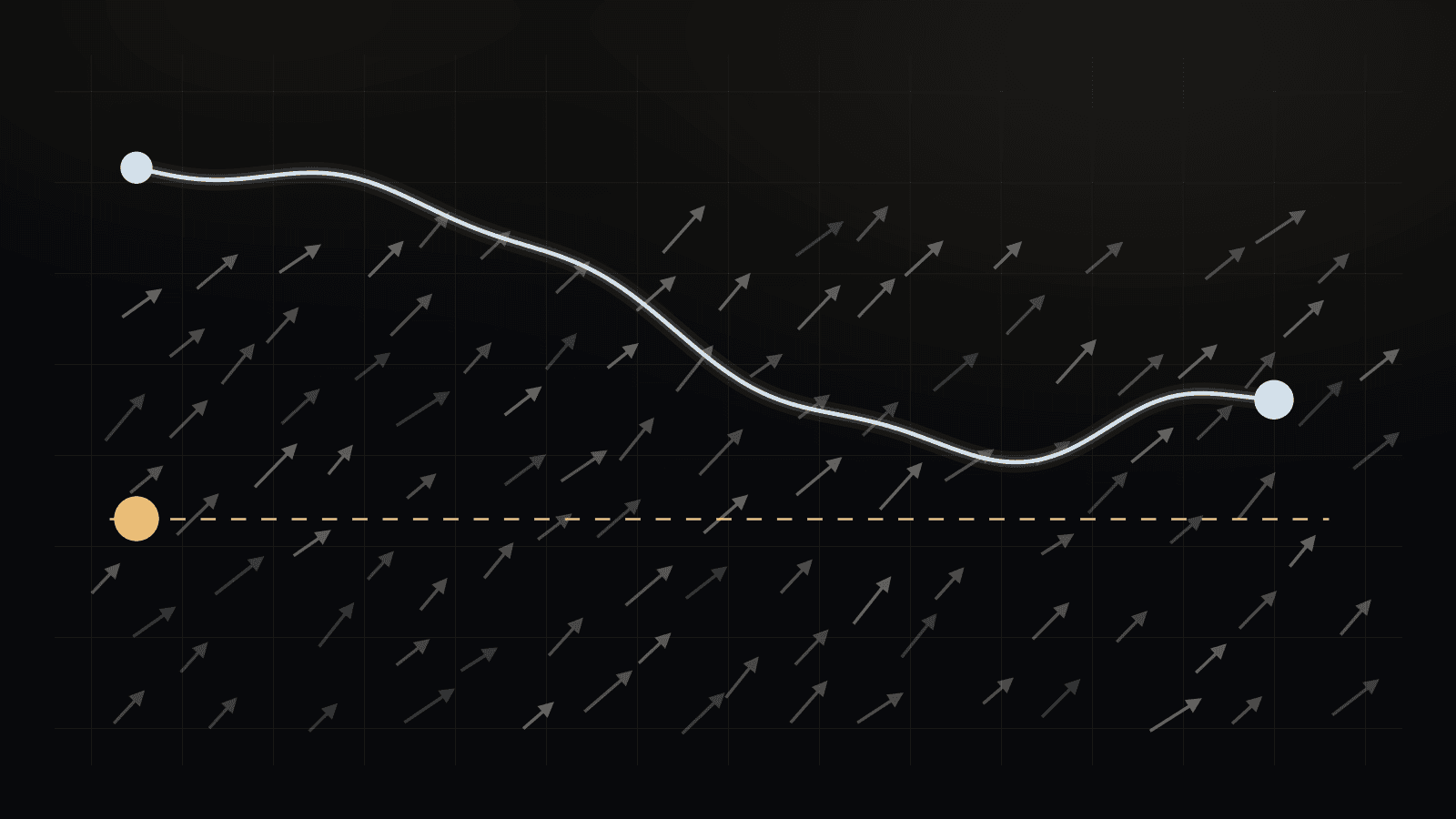
Reverse line movement is when the point spread moves against the side most bettors are on. Most tickets are on the favorite, but the favorite's number gets smaller. That often means bigger or sharper money is on the underdog. It is a clue, not proof.
The Week 5 Thursday night game between the Buccaneers and Cowboys on Oct. 8 gave a clean example. Here's what happened and how to use it.
What happened to the Bucs-Cowboys line?
Dallas opened as a 10-point home favorite early in the week. By Thursday morning, the spread was down to Dallas -8.5 at DraftKings, according to ESPN, and to -8 in the odds TheSpread listed. Over the same stretch, TheSpread reported that 72% of spread tickets were on Dallas.
That is the textbook shape. About three out of four bets were on the favorite, and the favorite's number got smaller instead of bigger.
Then it moved again. By 10:39 AM PT on game day, the DraftKings line on ESPN's game page was back up to Dallas -9.5. Same game, same week, and the line went down and then came back up. That is the first lesson: a line move is a snapshot, not a verdict.
What is the difference between tickets and handle?
Tickets are the number of bets. Handle is the money. A $20 bet and a $20,000 bet each count as one ticket, but they are very different amounts of handle.
When a site says 72% of tickets are on a team, it is counting bets, not dollars. If the handle split is closer to even, or leans the other way, a smaller number of larger bets is on the other side. The split TheSpread published for this game counted tickets. We did not find a published handle split for it.
Sportsbooks move lines based on how much money comes in and who is betting it, not just the bet count. That is how a line can move against the tickets.
What does sharp vs. square mean?
A sharp bettor is someone with a long record of getting better numbers than the closing line. Books pay attention to those bets and often move the line when they come in. A square bettor is a casual or recreational bettor, often betting favorites, popular teams and overs.
Reverse line movement is often read as sharp money on the less popular side. Sometimes that read is right. Sometimes the move comes from injury news, a quarterback change, weather, or a book managing its own risk. The move tells you something happened. It does not tell you what, and it does not tell you who will cover.
Does reverse line movement mean you should bet the other side?
No. Line movement is information, not an instruction.
By the time you see a move, the price that caused it is gone. If you follow it now, you are getting a worse number than the bettors who moved it, and you are betting a game you never priced yourself. A bettor who took Tampa Bay +10 early in the week and a bettor who took +8 on Thursday morning are holding different bets, even though they picked the same team.
How should you use line movement in your own betting?
Set your own number before you look at the line. Write down what you think the spread should be. Then compare it to the line and to how the line has moved.
- If the line moved toward your number, the market agreed with you. That is useful feedback, not a reason to raise your bet size.
- If the line moved away from your number, ask what you might have missed, such as injury news, a quarterback change, or a matchup you rated too high. Then decide whether your number still holds.
- If you never set a number, the move is just something you are reacting to. Pass, or log it as a paper bet.
Don't chase a move you didn't price. Chasing a line works a lot like chasing losses. You are reacting to something that already happened instead of following a plan you made ahead of time.
How do you grade yourself after the game?
Grade against the closing line, not the final score. Closing line value (CLV) compares the number you took with the last line before kickoff. If you took an underdog at +7.5 and it closed at +6.5, you got a better number than the close by a point. It does not tell you the bet won, and it does not promise a profit. We walk through it in What Is Closing Line Value (CLV)?
For any game you look at, write down three things before kickoff: your number, the line you saw, and the time you saw it. After kickoff, add the closing line. Over a season, that record shows whether your numbers hold up.
BetSharper is built for exactly that: set your number before you see the line, log the line you took, and grade it against the close. Start your journal at betsharper.ai.
Common questions
What is reverse line movement in sports betting? It is when the line moves against the side getting the most bets. For example, most tickets are on the favorite, but the favorite's spread gets smaller.
Is reverse line movement a sign of sharp money? Often, but not always. It can mean larger or more respected bets are on the other side. It can also come from injury news or from a book managing its own risk.
Should I bet a game because of reverse line movement? Not by itself. Set your own number first, then compare it to the line. If you did not price the game, a line move is not a reason to bet it.
21+ (18+ where permitted). Gambling problem? Call 1-800-MY-RESET (or 1-800-GAMBLER) · ncpgambling.org
BetSharper is a journal for your own numbers. It doesn't take bets and doesn't promise results.